
Sumitomo Group Forum 2026 Empowers Youth to Tackle Microplastic Pollution
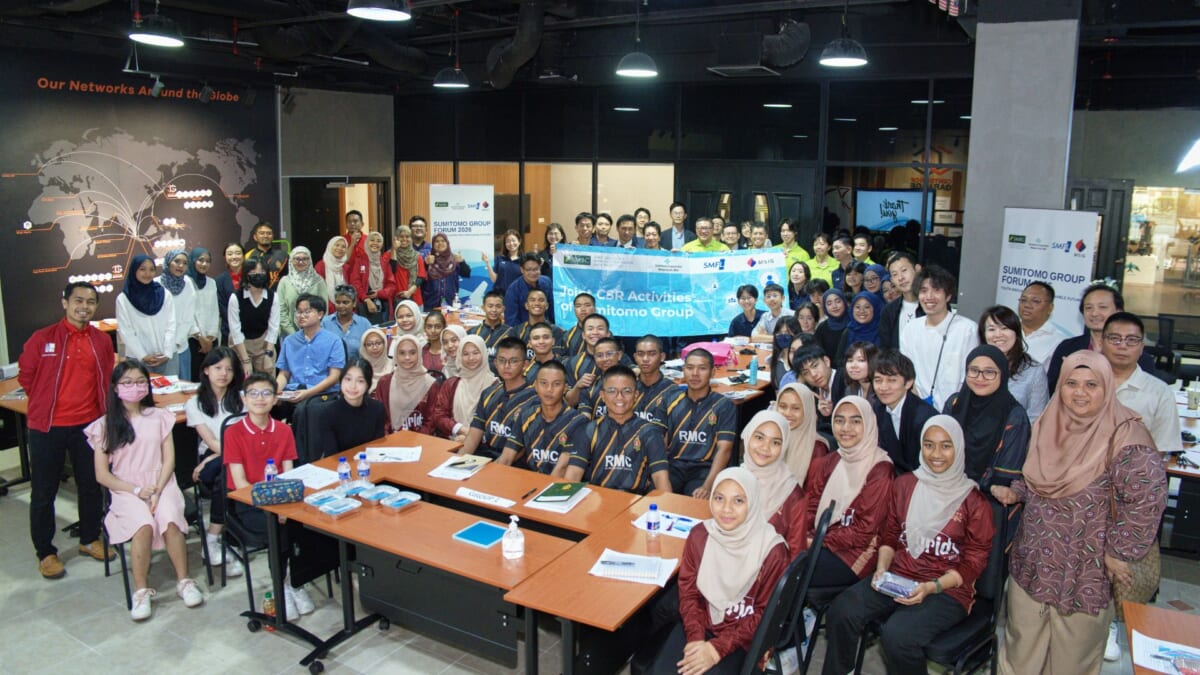
Cyberjaya, 18 January 2026- Four Sumitomo Group companies in Malaysia, including Sumitomo Mitsui Banking Corporation Malaysia Berhad, Sumitomo Corporation Malaysia Sdn. Bhd., SMFL Leasing (Malaysia) Sdn Bhd, and MSIG Insurance (Malaysia) Bhd, together with Leave a Nest Malaysia, held the Sumitomo Group Forum 2026: Youth Innovation for a Sustainable Future, themed “Tiny Plastic, Big Problem,” at the Centre of Garage Malaysia in Cyberjaya. The day long forum highlighted the role of STEM education and youth led innovation in confronting microplastic pollution and showcasing real world solutions.
The event marked a renewed corporate social responsibility (CSR) commitment by Sumitomo Group Malaysia to make STEM education a core pillar of its CSR work and to link young researchers with industry and scientific expertise. Prize winning student teams from Science Castle Asia 2025 represented Maktab Tentera Diraja, Sekolah Menengah Sains Seri Puteri and Tzu Chi International School Kuala Lumpur. They joined educators, researchers, corporate leaders and sustainability focused startups to learn about plastic and microplastic pollution and to discuss practical responses.
The forum opened with welcome remarks from Leave a Nest Malaysia and Sumitomo Group representatives and a keynote lecture by Dr Rashidi Abdull Manap of Universiti Putra Malaysia, who outlined the science of microplastic contamination and called for interdisciplinary, scalable responses. A hands on Science Workshop led by Dr Dania Qarrina gave students a chance to apply scientific thinking to real world problems.
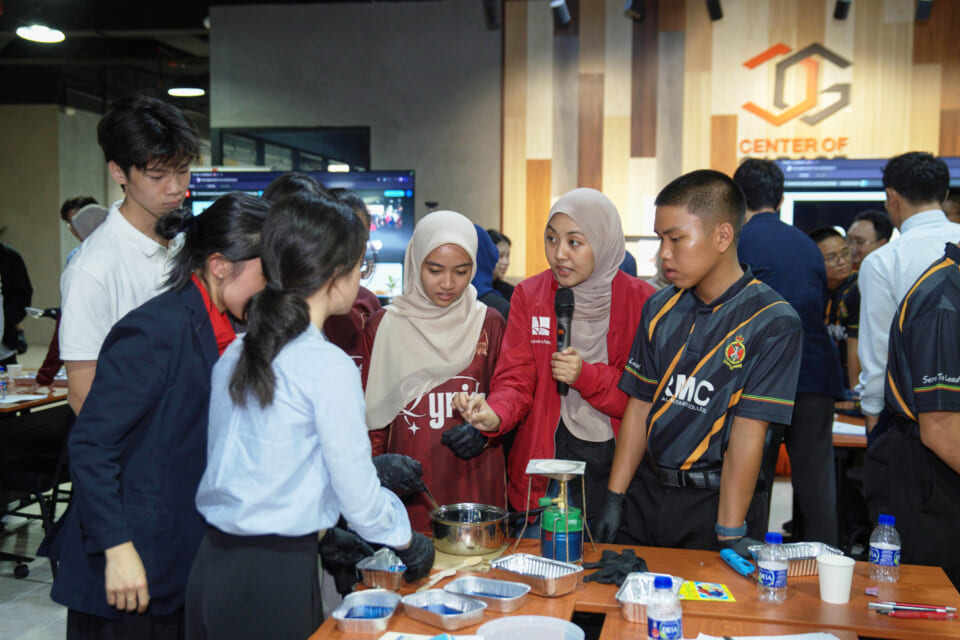
Dr Dania Qarrina explained the science behind each activity and guided students through hands-on experiments.
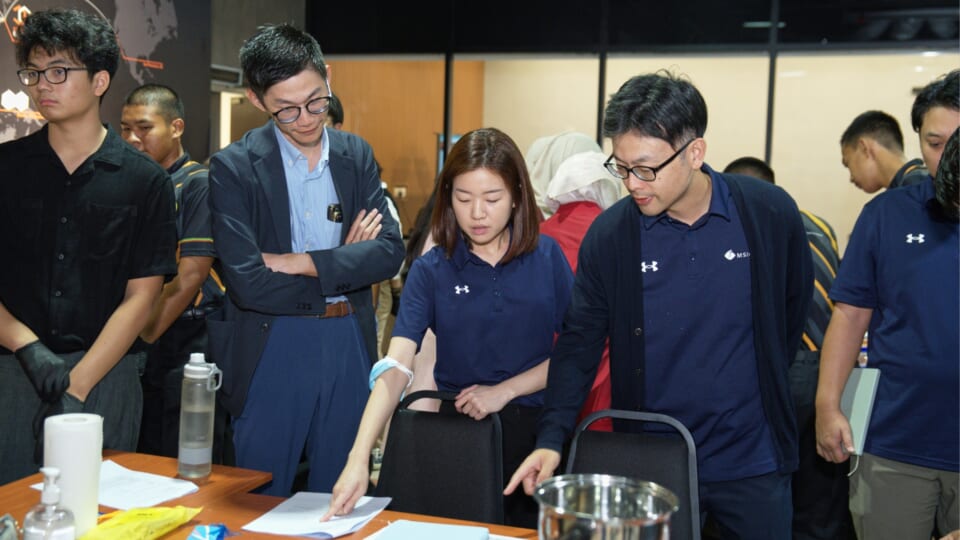
Members of the Sumitomo Group actively participated during the event, working alongside students in the hands-on activities.
In the first activity, students emptied trays of beach sand and hunted through every scrap of plastic and rubbish. Working in teams, they sorted the plastic pollutants into seven types of plastic categories and observed closely why each type behaves differently in the environment. That discovery set up the second activity, which began with a simple question: “Is the tray really clean now?” When answers varied, facilitators explained that plastics do not disappear but fragment into microplastics. Students learned that microplastics are particles smaller than five millimetres, that they originate from the breakdown of larger items and from sources such as synthetic clothing fibers, tyre wear and microbeads in personal care products, that they can persist for decades and travel in freshwater, ocean, soil and even air, and that they can absorb toxic pollutants and be eaten by organisms, causing bioaccumulation up the food chain. Using a simple sieving technique similar to methods scientists use, the students filtered sand until tiny plastics appeared and then examined them under microscopes to make the invisible problem unmistakably real.
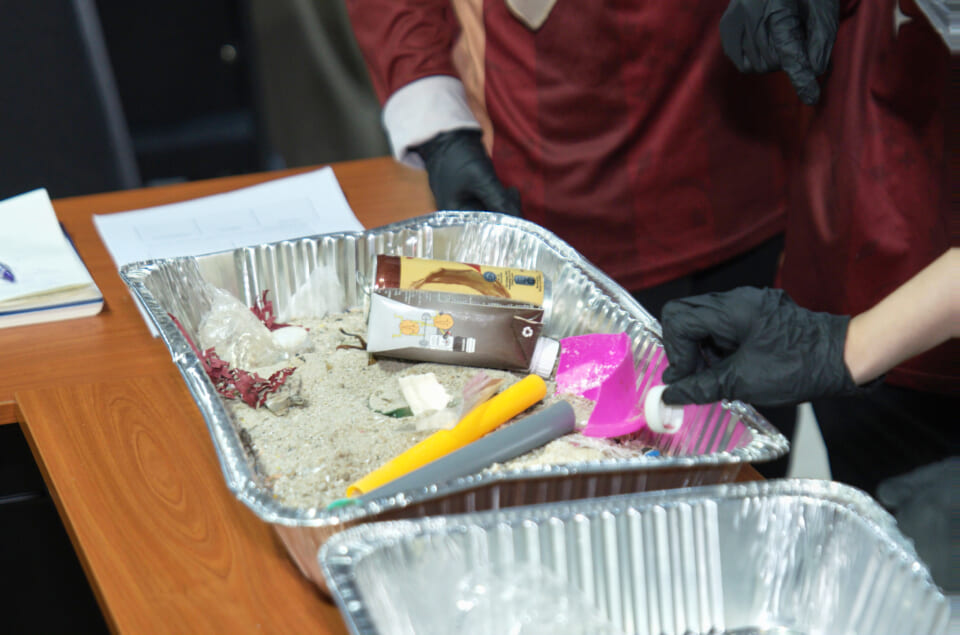
Trays of beach sand and collected pollutants recreated real beach conditions for sorting and analysis.
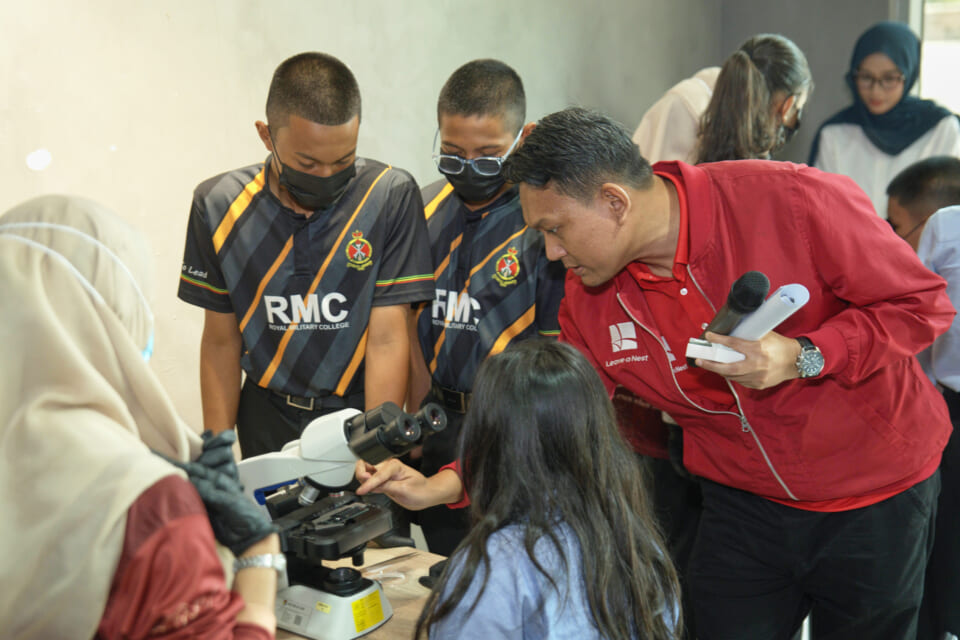
Dr Izwan taught students how to use microscopes to examine sieved particles and identify microplastics.
After the hands-on scientific activities, three startups brought industry perspective and hope. Amu Inc from Japan showcased advances in sustainable materials and nature-inspired manufacturing, NuPlas Solutions presented innovations in plastic recycling and circular economy approaches, and Ichthion Ltd from the United Kingdom described technologies that intercept plastic in rivers before it reaches the sea.
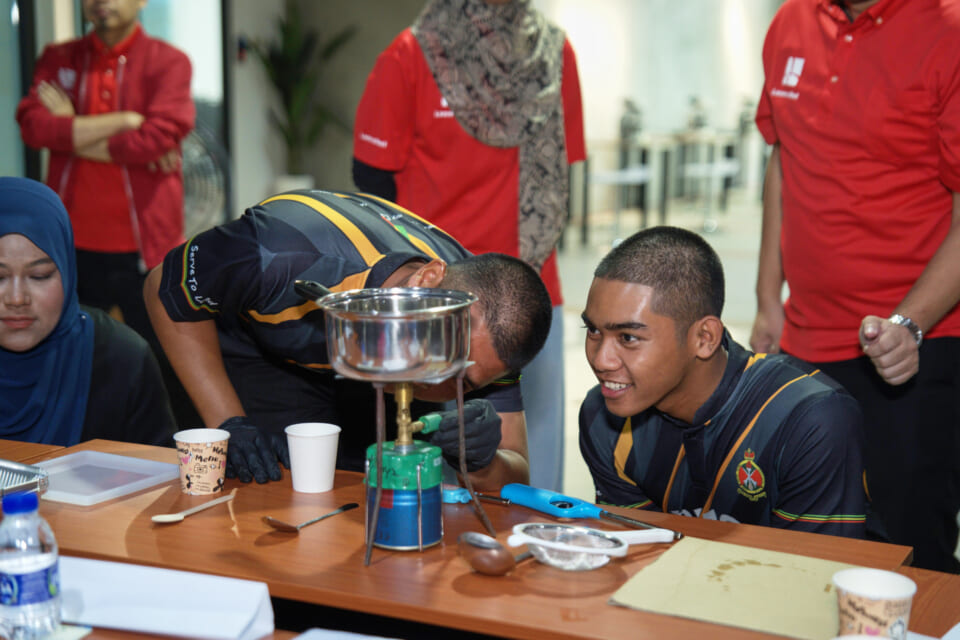
Students made simple bioplastics from organic materials such as pectin and algae, then tested their properties as potential alternatives to non-biodegradable plastics.
In the third activity, students explored alternatives by making simple bioplastics from organic ingredients such as pectin and algae, then tested samples for strength and rate of breakdown to evaluate trade-offs between durability and biodegradability. The day ended with a lively mindstorm session in which teams turned observations into problem statements and then into practical proposals. Students sketched ideas, built short pitches and discussed feasibility like young scientists.
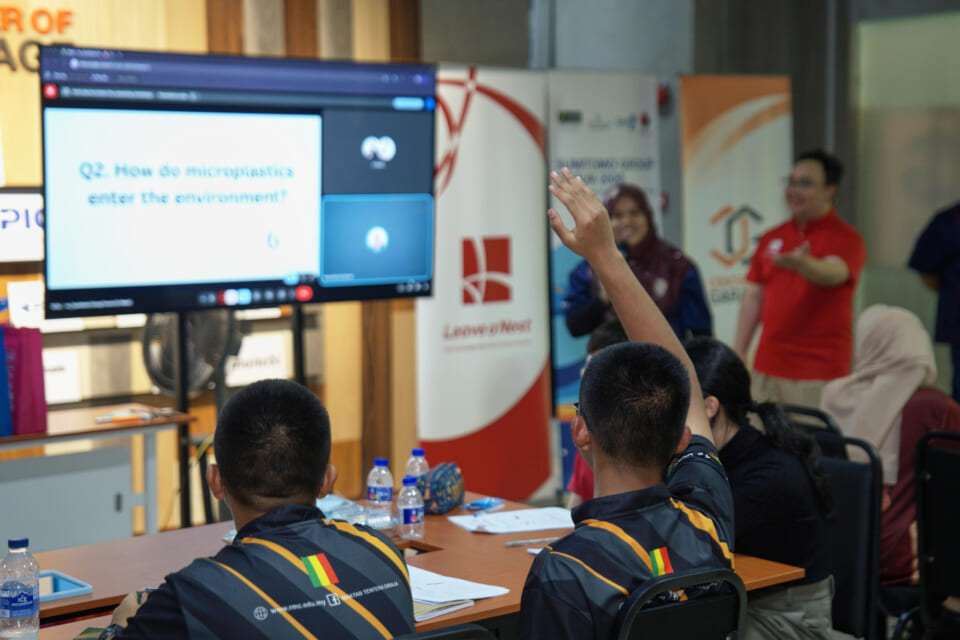
Students actively participated in group discussions, sharing ideas, asking questions and developing proposals to address plastic pollution.
The forum underlined Sumitomo Group’s long-standing philosophy of contributing to society through responsible business and environmental stewardship, and reinforced Leave a Nest’s mission to bridge education, science and industry. By equipping youth with knowledge, tools and real-world perspectives, the forum aims to inspire sustained action toward cleaner rivers, healthier oceans and a more sustainable future, one tiny plastic at a time.