
Leave a Nest Founder and Group CEO Dr. Yukihiro Maru Moderates AI and Semiconductor Panel at the New Japan–Malaysia Industrial Cooperation Seminar
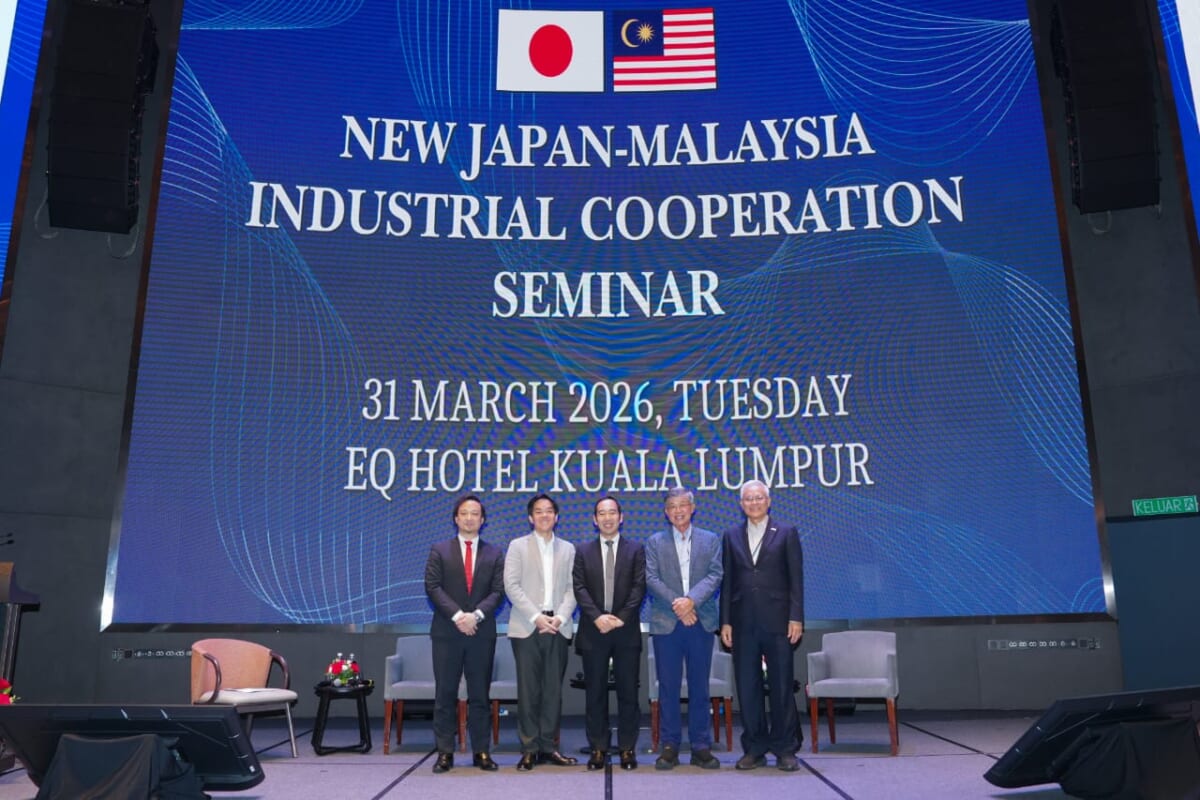
On March 31, 2026, Leave a Nest Co., Ltd. (Headquarters: Shinjuku, Tokyo; Group CEO: Yukihiro Maru) participated in the New Japan–Malaysia Industrial Cooperation Seminar held in Kuala Lumpur, where Dr. Maru served as moderator for the AI and Semiconductor panel session.
The seminar, organized by the Embassy of Japan in Malaysia together with partner institutions, was designed to deepen industrial collaboration between Japan and Malaysia. It forms part of Japan’s broader growth strategy, which identifies 17 priority sectors critical to economic security and long-term competitiveness. Within this framework, the seminar provided a platform to advance collaboration in key areas such as semiconductors, green transformation (GX), and artificial intelligence.
The panel session brought together leading experts from both countries. It featured a keynote by Mr. Ren Ito (Co-Founder, Sakana AI) and Dato’ Seri Wong Siew Hai (President, Semiconductor Industry Association of Malaysia, MSIA), who also joined the subsequent panel discussion alongside Mr. Masaru Tsuchiya (Partner, McKinsey & Company) and Mr. Goh Peng Ooi (President, AI Malaysia).
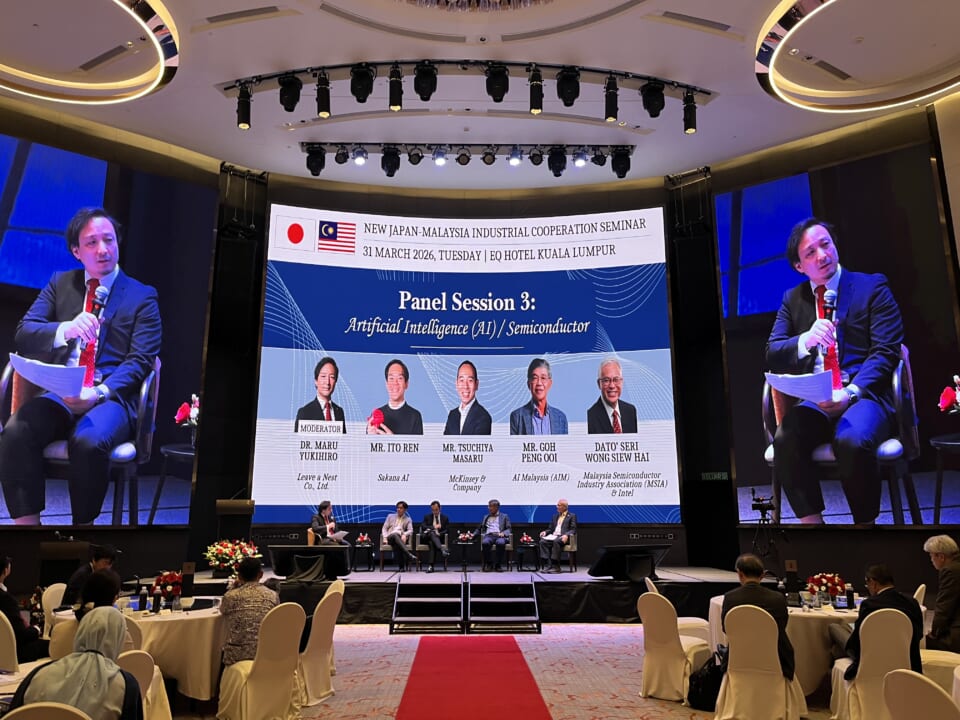
Panel Session 3: Artificial Intelligence (AI) and Semiconductor
From left: Dr Yukihiro Maru (Group CEO, Leave a Nest Co., Ltd.), Mr. Ren Ito (Co-Founder, Sakana AI), Mr. Masaru Tsuchiya (Partner, McKinsey & Company), Mr.Goh Peng Ooi (President, AI Malaysia), Dato’ Seri Wong Siew Hai (President, MSIA)
From General-Purpose AI to Real-World Applications — Insights from Agriculture
One of the central themes of the discussion was the evolving direction of AI development. Rather than continuing to rely solely on increasingly large foundation models, there is a growing emphasis on integrating industry-specific tacit knowledge into AI systems. Panelists noted that many AI initiatives struggle to deliver impact because they lack integration with real-world operational knowledge.
Agriculture was highlighted as a particularly relevant example. By applying AI to time-series data such as weather patterns, soil conditions, and crop performance, it becomes possible to generate insights tailored to specific locations. This includes predicting localized climate impacts and understanding how environmental factors influence crop quality. Such approaches move beyond general forecasting toward practical, site-specific decision support, with the potential to improve both productivity and resilience.
This shift reflects a broader transition in AI—from digital tools to technologies that support decision-making in complex, real-world environments. In ASEAN, where agriculture remains a key industry, this intersection is expected to play a significant role in driving meaningful adoption.
Advancing Semiconductor Collaboration Between Japan and Malaysia
The panel also explored opportunities for deeper collaboration in the semiconductor sector. As global supply chains continue to evolve, Japan and Malaysia are well positioned to build on their complementary strengths. Japan’s leadership in materials, equipment, and precision engineering aligns with Malaysia’s established capabilities in assembly and testing.
With the rapid expansion of AI driving demand for advanced chips, the industry is facing challenges that extend beyond manufacturing capacity. Addressing these challenges will require coordinated progress across design, materials, and production processes. The discussion underscored the importance of cross-border partnerships in supporting the next phase of semiconductor development.
Energy Demand in the AI Era and the Role of Emerging Technologies
Another key topic was the growing energy demand associated with AI. As computing requirements continue to rise, efficiency gains alone may not be sufficient to offset overall consumption. Ensuring a stable and sustainable energy supply is becoming an increasingly critical issue.
In this context, panelists also pointed to emerging energy technologies, including nuclear fusion, as part of the long-term solution space. While still under development, fusion holds promise as a future source of large-scale, stable, and low-carbon energy, with the potential to support the expanding demands of digital and industrial systems.
By facilitating dialogue among researchers, industry leaders, and policymakers, Leave a Nest aims to accelerate the translation of emerging technologies into real-world impact. Moving forward, Leave a Nest will continue to drive co-creation across Asia and beyond, contributing to the development of deep-tech innovation and new industrial value.