
Curiosity in Full Bloom: Ki Ni Naru 2025 Officially Kicks Off
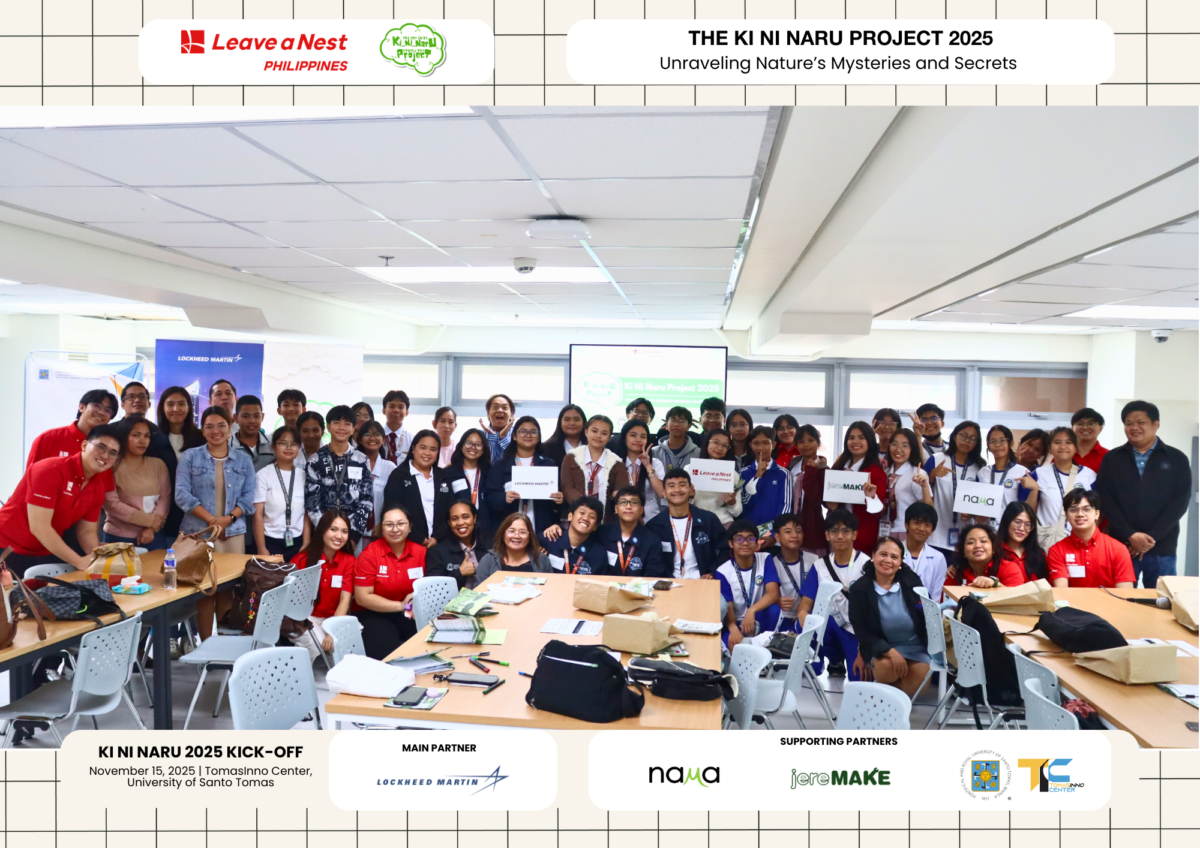
MANILA, PHILIPPINES — On 15 August 2025, the Ki Ni Naru Project 2025 officially launched its months-long research training program through a vibrant Kick Off event that welcomed sixty (60) attendees, including student teams from five (5) different schools who will undergo training (Read more here: https://global.lne.st/KNN-KickOff-2025). Setting the tone for the program, the event opened at the University of Santo Tomas TOMASInno Center (UST TIC) Mezzanine, where Ms. Krisha Corbo, the master of ceremonies, led a lively “Imposter Game” icebreaker that energized the students for the sessions ahead.
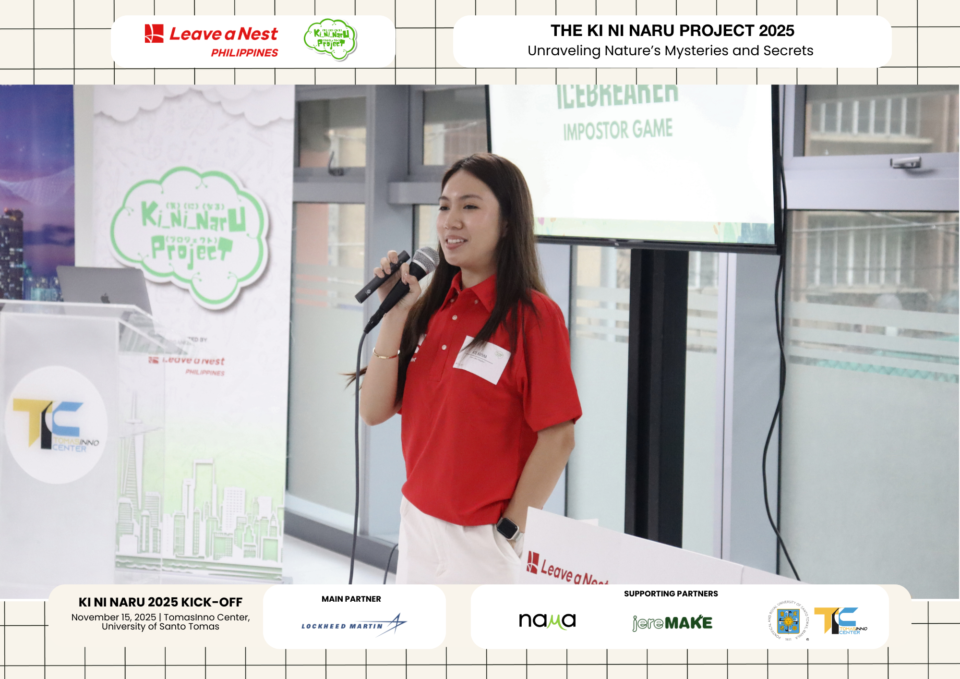
Ms. Krisha Corbo, the master of ceremonies, facilitated the icebreaker.
The program continued with the Welcoming Remarks delivered by Mr. Edriel Lee, Project Leader of Ki Ni Naru 2025. He began by sharing his personal journey as a young science enthusiast, highlighting how his early experiences shaped his curiosity for the natural world. Amid these reflections, he underscored the importance of giving students access and support to experience science not merely as a collection of facts, but as a process of asking questions, experimenting, and seeking truths. Welcoming this year’s batch of Ki Ni Naru students, he encouraged each one to recognize nature’s invitation to explore, question, and learn, and to embrace the learning process fully.

Mr. Edriel Lee, the project leader of Ki Ni Naru 2025, delivered the welcoming remarks.
This was followed by the Keynote Address from Dr. Gizelle A. Batomalaque, University Researcher II from the University of the Philippines Marine Science Institute (UPMSI). As a malacologist, artist, and storyteller, Dr. Batomalaque emphasized that true scientific practice begins with being present — recognizing one’s privileges, making the most of available resources, embracing curiosity through consistent effort, and conducting regular self-checks. She highlighted the importance of staying flexible in the face of plans that may not always work in practice, and reminded students that meaningful research is a community endeavor that thrives on humility, collaboration, and valuing the contributions of others.
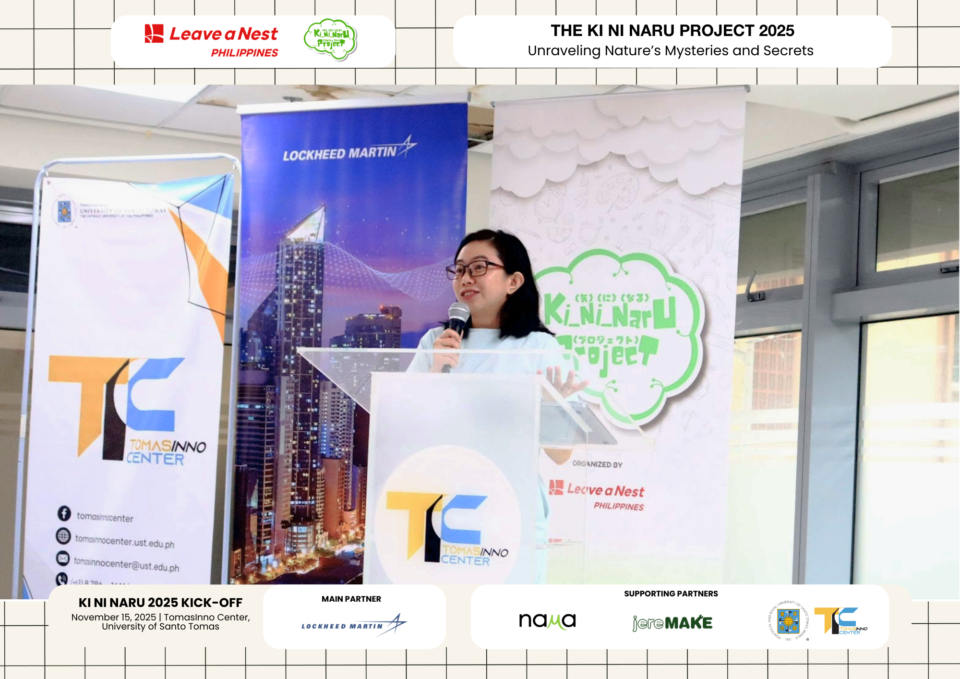
Dr. Gizelle Batomalaque, keynote speaker, presented her keynote speech.
The Kick Off program was likewise graced by Ms. Abigael Go, representing Lockheed Martin, the main partner of Ki Ni Naru 2025. She warmly welcomed the students and emphasized curiosity as a value shared by both the program and Lockheed Martin. Ms. Go noted that breakthroughs often begin with asking “what if,” an outlook that continues to drive the company’s innovations. Grateful for the partnership with Leave a Nest Philippines, she affirmed their shared advocacy of nurturing young minds beyond the classroom and encouraged students to remain open, present, and inquisitive in the months ahead, as even simple questions may unlock insights that can positively change their lives and those of others.
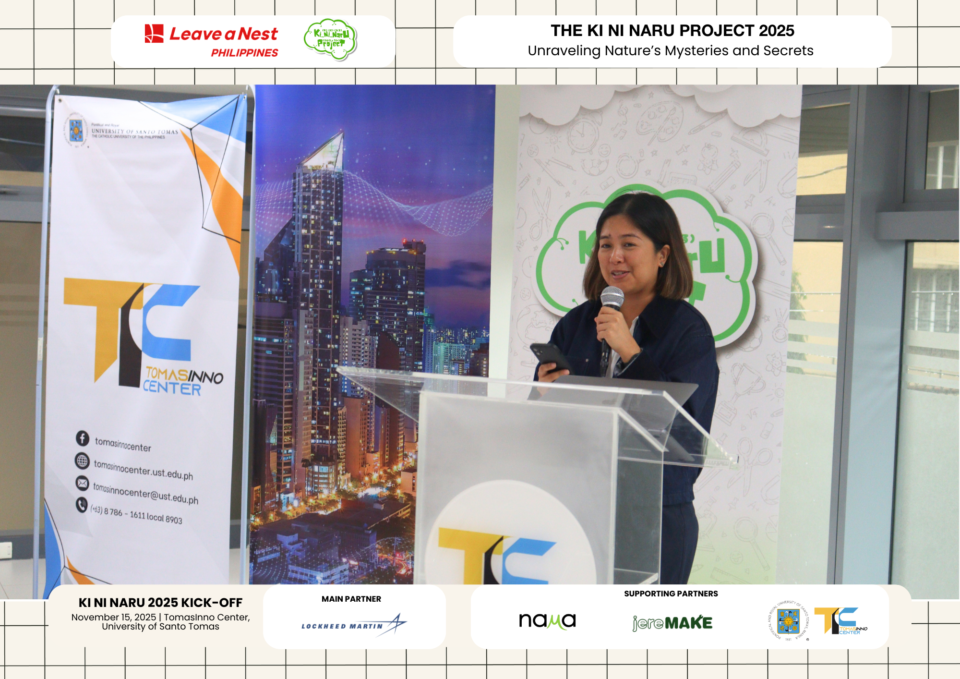
Ms. Abigael Go, a Lockheed Martin representative, gave a speech on behalf of the company.
While not physically present, Mr. Eldrin Lee of Nama Urban Farm Inc., a supporting partner of Ki Ni Naru Project 2025, sent a message to further inspire curiosity during the opening event. As read by the master of ceremonies, he emphasized that learning is not confined to the classroom and encouraged students to let their curiosity lead them to new places and discoveries. In light of this year’s theme, he also reminded participants of the importance of being responsible environmental stewards, noting that there is “no Planet B.”
Carrying these messages forward, the program then pivoted to the Pugad Agham Science Experiment Workshop, beginning with the introduction of the Teaching Assistants who will guide the students throughout the sessions, as well as the Teaching Manager, Ms. Hannah Balisi, who will lead the lecture. This workshop centered on the concept of adaptation, using the humble potato as a model to illustrate how certain changes can support survival not only in plants, but also in humans’ daily lives. By linking biological and psychological perspectives, the activity explored how adaptation enables both organisms and individuals to navigate challenges and grow.

Ms. Hannah Balisi, Teaching Manager, called on a Ki Ni Naru student to recite.
In the first experiment, the students compared the potato tuber, a modified stem, and the malabar spinach stem macroscopically, noting the physical differences between the two. They then utilized the Makeroscope, generously provided by our supporting partner, Jeremake Innovation Inc., to further examine these differences microscopically. The activity was met with much excitement, especially when they applied iodine staining procedures, which highlighted specific plant structures for more in-depth observation and discernment. Through this, the students discovered that there is truly more than what meets the eye.

A group of Ki Ni Naru 2025 students used the Jeremake Makeroscope as part of the first science experiment.
This learning was further reinforced by the second experiment, where the students were also able to witness the limitations of adaptation through catalase — an enzyme and an adaptation in itself that allows potatoes to survive in an oxygen-rich environment. After subjecting the potato samples to different treatments (i.e., heat, vinegar, and untreated), the students observed the effects on catalase functionality by measuring the amount of bubbles produced as it reacted with hydrogen peroxide, truly sparking their curiosity about the phenomenon unfolding before them.
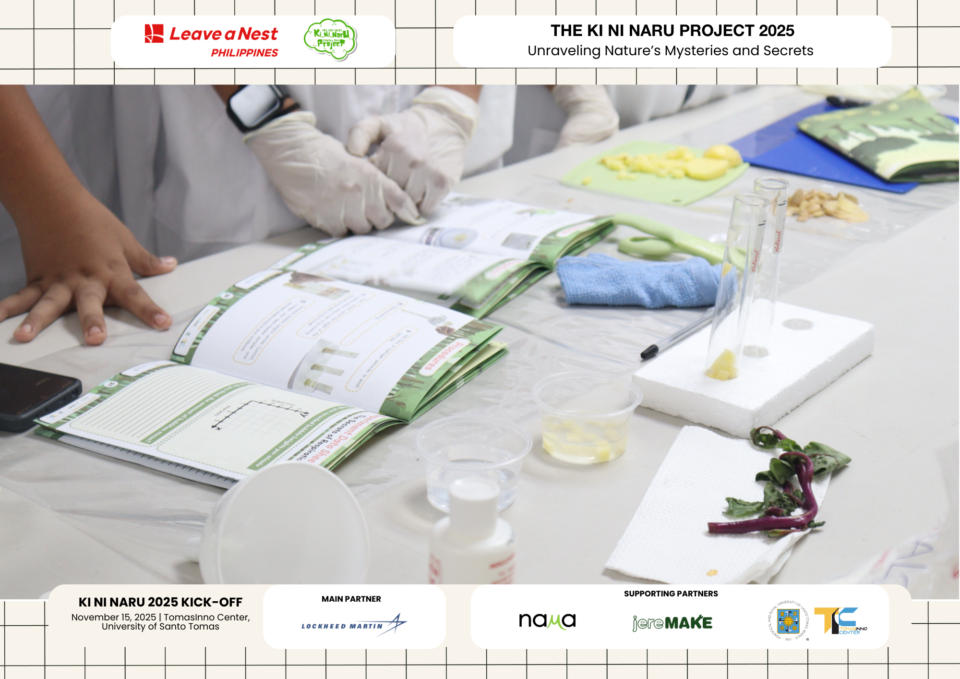
A group of Ki Ni Naru 2025 students prepared the second experimental set-up.
Later on, the key takeaways from the biological perspective of adaptation were connected to a psychological lens, emphasizing that adaptations and changes can occur even when we cannot see them. In humans, this is reflected in mental adaptation, wherein changes in thinking and behavior are employed to better adjust to situations or environments. Sharing her experiences and journey in pursuing Psychology, Ms. Balisi emphasized that people are built to adapt, and that they should not be afraid to embrace change and challenge themselves to grow. The morning wrapped up with students sharing their key takeaways, and the distribution of Jeremake Laboratory Kits and Nama Starter Kits, generously provided by Jeremake Innovations Inc. and Nama Urban Farm Inc., respectively.
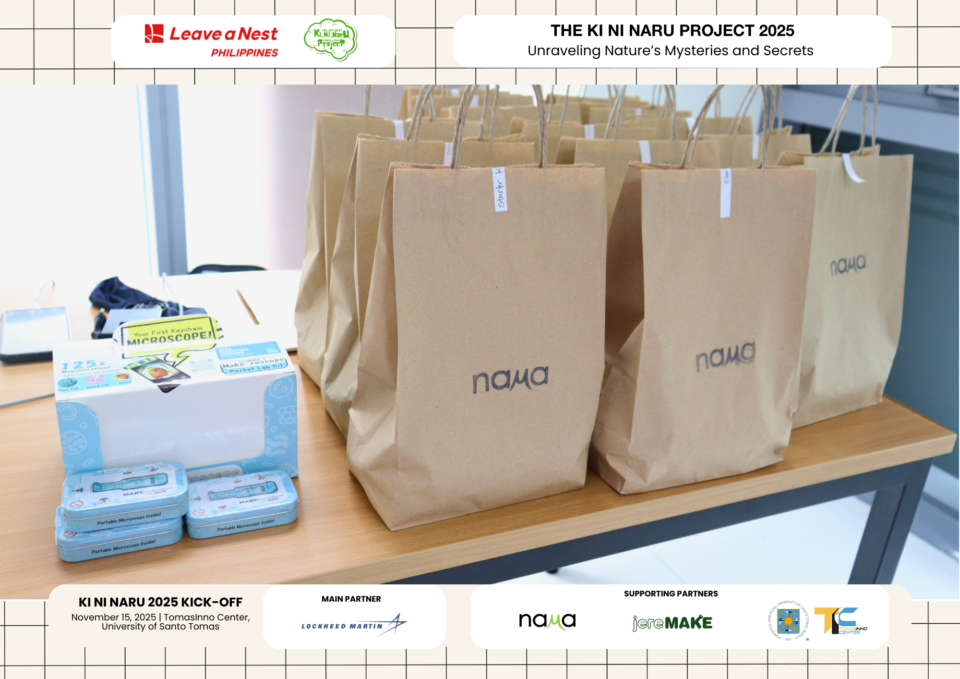
Gifts from supporting partners Nama Urban Farm Inc. and Jeremake Innovations Inc. were given to the participants.
After the morning activities, all attendees headed to the National Museum of Natural History for the next segment of the Kick-Off Program, further instilling a deeper sense of curiosity, exploration, and connection with nature. The Museum Tour began with an overview talk delivered by volunteers. Afterward, the student teams, together with teachers and Leave a Nest members, were given the opportunity to explore the museum and immerse themselves in the exhibits. Subsequently, everyone gathered and formed breakout groups, discussing their learnings with Leave a Nest members.

Student volunteers from the National Museum of Natural History delivered the overview talk.

Ki Ni Naru student participants, along with their teachers, viewed the museum exhibits.
The eventful Kick-Off concluded with closing remarks delivered by Mr. Ronrick Arayata, one of the directors of Leave a Nest Philippines, who expressed his gratitude to all participants and wished them the very best in their research journeys. With sparks in their eyes, the students unlocked new curiosities, gained a deeper appreciation for nature, and found inspiration for the research projects they will embark on in the coming months.

Mr. Ronrick Arayata, one of the directors of Leave a Nest Philippines, delivered the closing remarks.
Undeniably, the Ki Ni Naru 2025 Kick-Off Program set a conducive tone and a strong momentum for exploration and discovery in the months ahead. As the students embark on their research journeys, they will be guided in transforming their fascinations into scientific inquiry through a thorough understanding of the fundamentals of research and investigation. Over the next four months, participants will engage in mentoring sessions and asynchronous online modules to build their student-led research projects, which will be presented on the Final Presentation Day on 28 February 2026.
Moving forward, the Ki Ni Naru 2025 team remains committed to seeking meaningful ways to support the students and enrich their learning experience. Those interested in collaborating or partnering with us in this initiative may contact Mr. Edriel Lee at [email protected] or Ms. Jewel Santos at [email protected].