
SCIENCE CASTLE ASIA 2026 INSPIRES YOUNG RESEARCHERS TO “ADVANCE SCIENCE” FOR A SUSTAINABLE FUTURE
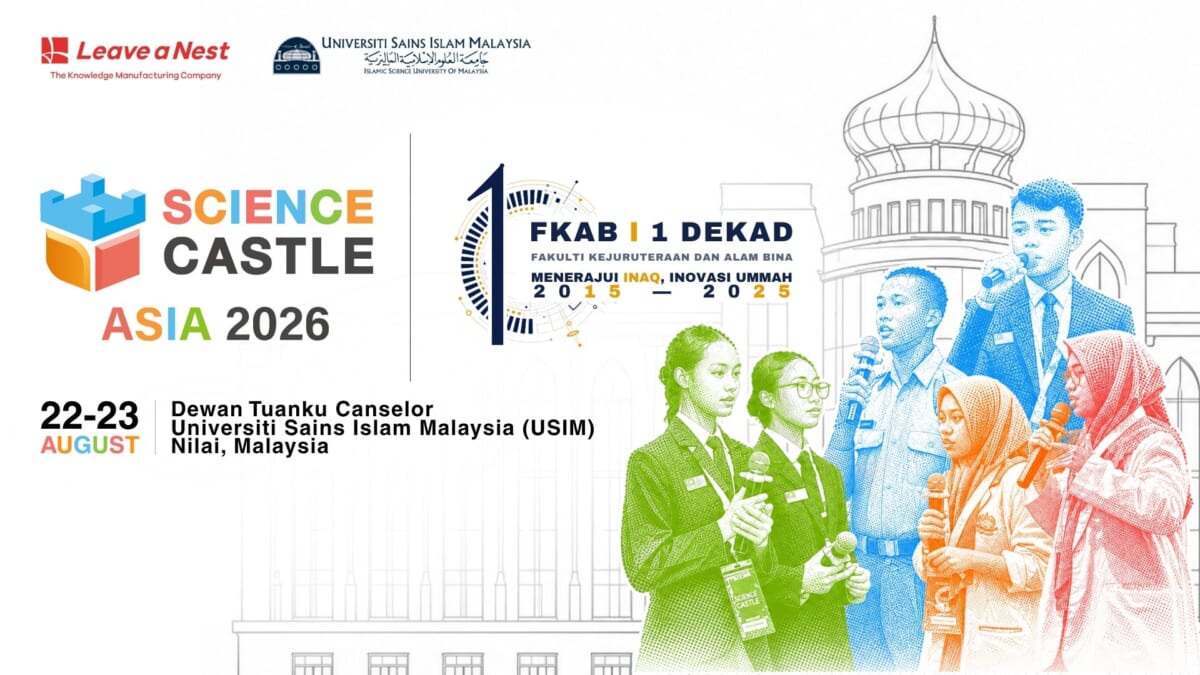
NILAI, NEGERI SEMBILAN, 26 AUGUST 2026 – Science Castle Asia 2026 successfully concluded at Universiti Sains Islam Malaysia (USIM), bringing together young researchers, educators, universities and industry partners to exchange knowledge and celebrate student-led scientific innovation across Asia.
Held on 22–23 August 2026, the conference was organised by Leave a Nest Malaysia in collaboration with USIM’s Faculty of Engineering and Built Environment.
This year’s theme, “ADVANCE SCIENCE,” reflected the conference’s mission to inspire young researchers to move beyond ideas, advance their scientific discoveries and take meaningful steps towards developing solutions for the future.
Through this theme, students were encouraged to strengthen their research, challenge existing boundaries and confidently communicate how their scientific ideas could contribute to society.
The programme provided students with an international platform to present their research, receive feedback from scientists and industry professionals, and explore how science can respond to challenges in sustainability, food, agriculture, artificial intelligence, engineering, space and aerospace.
We extend our sincere appreciation to all partners for their invaluable support and contributions to the success of Science Castle Asia 2026. Your expertise, commitment and encouragement created meaningful learning experiences and inspired our young researchers to advance science for a better future.
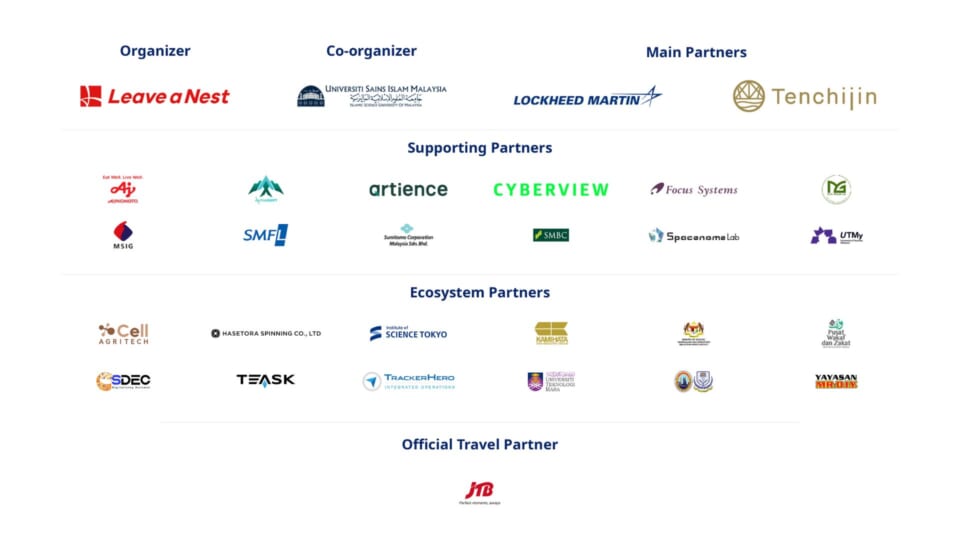
Our heartfelt appreciation to all Science Castle Asia 2026 partners for your invaluable support.
The first day began with an opening ceremony welcoming representatives from the Embassy of Japan in Malaysia, USIM and participating partner organisations.
The programme included welcoming remarks by Dr. Izzaty Ismail, Project Leader of Science Castle Asia 2026; special remarks by Dr. Yukihiro Maru, Founder and Group CEO of Leave a Nest; remarks by Professor Dato’ Ts. Dr. Sharifudin Md. Shaarani, Vice-Chancellor of Universiti Sains Islam Malaysia; and the official launch ceremony.
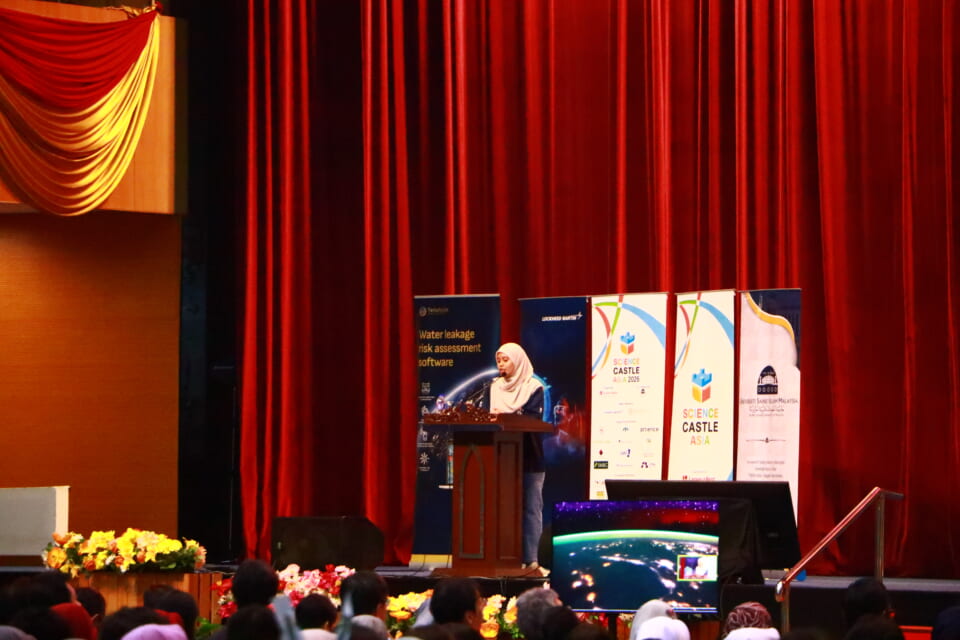
Opening remarks by Dr Izzaty, Project Leader Science Castle Asia 2026
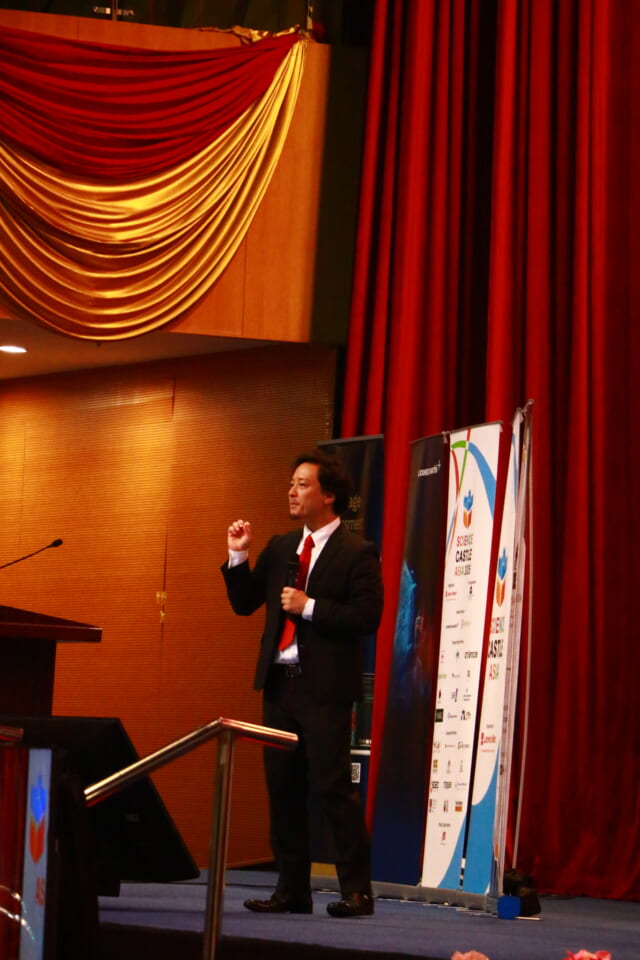
Dr. Yukihiro Maru, Founder and Group CEO of Leave a Nest, delivering his special remarks during the opening ceremony of Science Castle Asia 2026.
The occasion also marked the official launch of the first-decade celebration of USIM’s Faculty of Engineering and Built Environment.
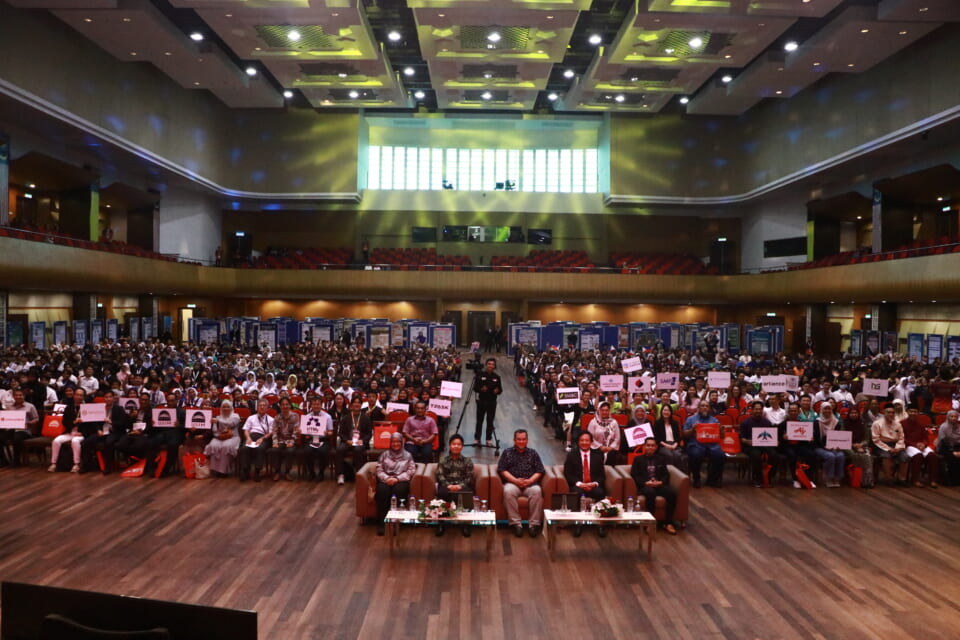
Science Castle Asia 2026 participants, partners and distinguished guests gathered at USIM to celebrate young researchers advancing science across Asia.
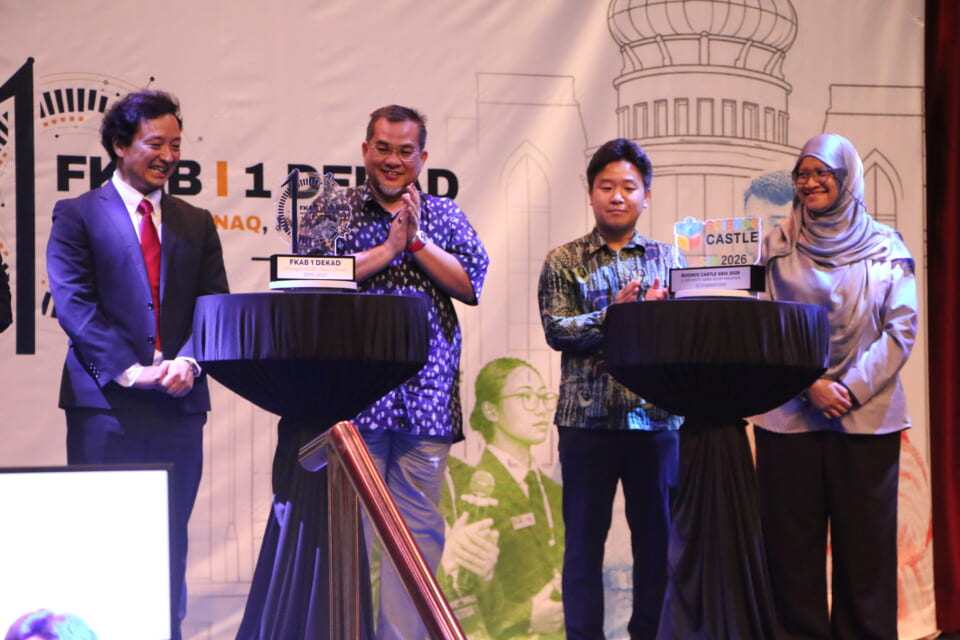
The official launch gimmick marking the opening of Science Castle Asia 2026 and the first-decade celebration of USIM’s Faculty of Engineering and Built Environment.
A keynote address by Ts. Dr. Norsuzlin Mohd Sahar, Director of the National Space Science Centre, Institute of Climate Change, encouraged participants to explore future opportunities through hands-on space education and STEM learning.
On the second day, the programme continued with Partner Sharing sessions, oral research presentations and hands-on science workshops.
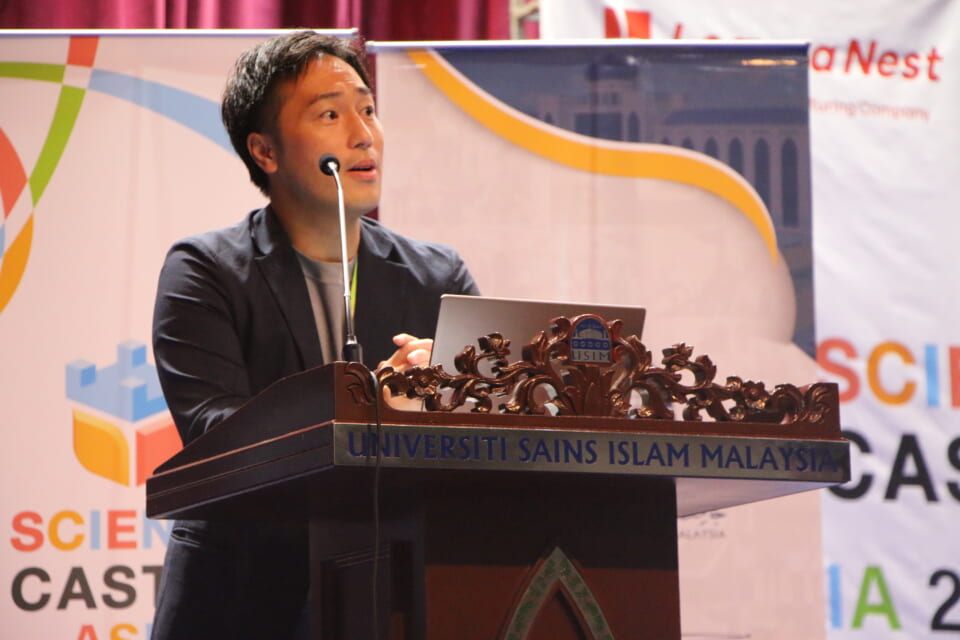
Partner remarks by one of Science Castle Asia 2026 main partner, Tenchijin.
During the Partner Sharing sessions, representatives from participating organisations shared their expertise, industry experiences and professional perspectives with the students. These sessions helped young researchers understand how scientific knowledge can be applied beyond the classroom to address real-world challenges and create future career opportunities.
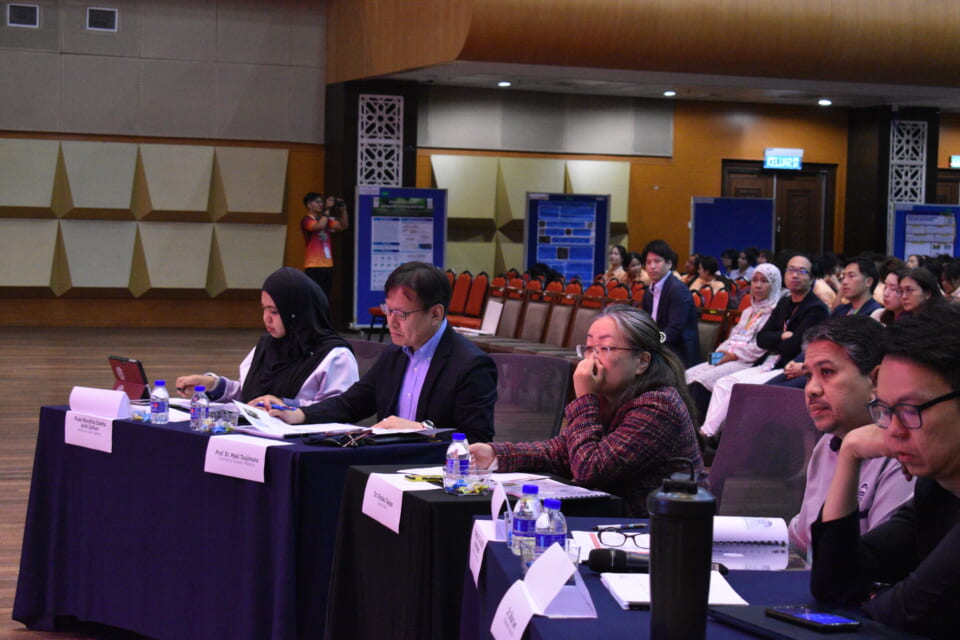
Oral panellists evaluating student research and providing valuable feedback during Science Castle Asia 2026.
The oral presentation sessions gave selected student teams an opportunity to communicate their research findings to a panel of judges and demonstrate their ability to explain the importance and potential impact of their projects.
Students also participated in eight hands-on science workshops facilitated by partner organisations. The workshops introduced students to practical applications of science and technology in space exploration, engineering, sustainability, agriculture, energy and biodiversity.
The workshop programme included:
| No | Partners Workshop | Title | Content |
| 1 | Lockheed Martin | Water Bottle Rocket | Students explored how aerodynamics, thrust, air resistance, pressure and stability work together to influence the flight of a water bottle rocket |
| 2 | Tenchijin | Eyes from Space: Solving Everyday Problems with Satellite Data | Using examples such as Himawari, Starlink and global navigation satellite systems, the workshop demonstrated how satellite data can support disaster response, environmental monitoring and agriculture. |
| 3 | Focus Systems | Eco Detectives: Reading Nature’s Clues | Students explored biodiversity, species distribution, habitats, food webs and ecological interactions to understand how living organisms are connected to one another and their environment. |
| 4 | Malaysian Space Agency | Development of the Space Sector in Malaysia | The workshop explored how satellites support communication, Earth observation, navigation, environmental monitoring and disaster management. |
| 5 | Spacenome Lab | Bringing Space Exploration to Your Classroom | Students became space engineers by programming a self-driving rover using GaraBlock software and the G-Robot Creator toolkit. |
| 6 | University of Tsukuba Malaysia | Carbon to Energy: Exploring Microbial Fermentation | Students investigated how microorganisms contribute to food production, energy and the environment. |
| 7 | MERC Greenfield | The Great Monsoon Challenge: Save the Plant! | Students also explored how hydrogel technology can contribute to sustainable agriculture, efficient water use and climate resilience in regions facing drought and water scarcity. |
| 8 | Yayasan MR D.I.Y. | Mission Mars: Build, Test & Engineer Your Solar Rover | The workshop also introduced students to the engineering process of designing, testing, troubleshooting and improving solar-powered systems for challenging environments such as the surface of Mars. |
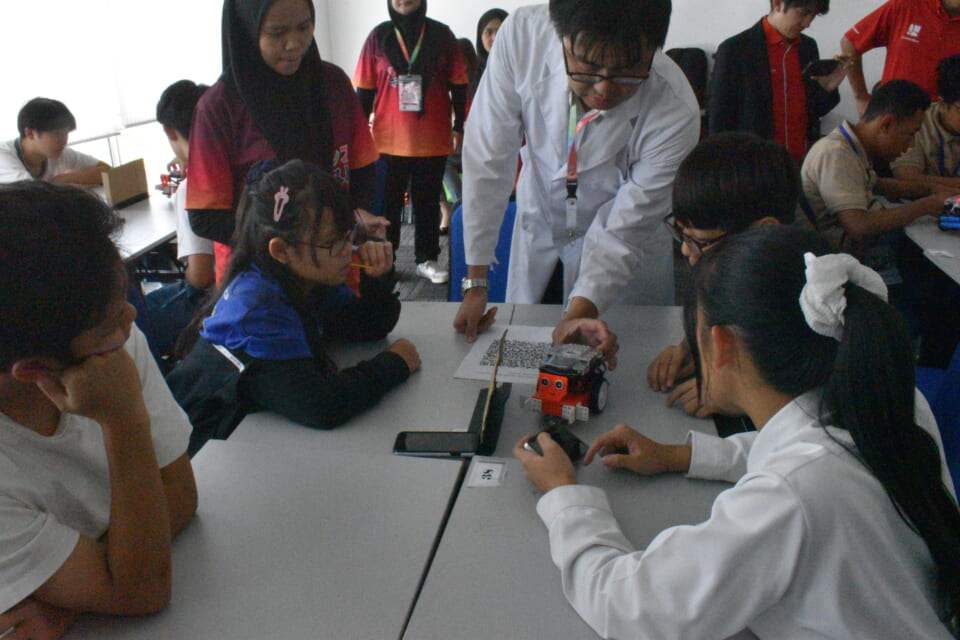
Spacenome Lab’s hands-on space robotics workshop.
The two-day conference concluded with an awards ceremony recognising outstanding oral and poster presentations by young researchers from across Asia.
ORAL AWARD RECIPIENTS
Leave a Nest Grand Award : O8 – Tokyo University of Agriculture The First Junior High School and High School, Japan
Research title: “Performance Comparison of Wavy Airfoil Sections”
Alphaswift Oral Award: O1 – Kofu Minami High School, Japan
Research title: Changes in the Properties of Caddisfly Silk in Response to Disinfectant Solutions.
Lockheed Martin Oral Award : O5 – Nueva Ecija High School, Philippines
Research title: Rambutan Nano-Sutures: The Future of Wound Care
POSTER AWARD RECIPIENTS
Sumitomo Group Poster Award
1) P77 – SMJK Kwang Hua, Malaysia : “Low-Cost AI Microplastic Detection”
2) P81 – SMK Bandar Puchong Jaya (A), Malaysia: “Waste-to-Wall: Engineering Sustainable Bio-Plastic Composite Bricks for a Circular Future”
3) P110 – SMK Putra Perdana, Malaysia: “Project Eco-Weave: Turning Water Hyacinth Invasions into Sustainable Paper and Green Jobs”
4) P132 – UCSI International School Kuala Lumpur, Malaysia: “Biodegradable Coral: Upcycling Food Waste into Marine Habitats and Micro-Nutrient Sources”
Spacenome Lab Poster Award
1) P82 – SMK Bandar Puchong Jaya (A), Malaysia : “Eco-Roots: Autonomous IoT Smart Farming Robot for Sustainable Agriculture
Hasetora Spinning Co., Ltd. Poster Award
1) P75 – SMA Cerdas Murni, Indonesia “S-Co Fiber: Cellulose-Based Eco-Cooler”
Kamehata Fisheries Poster Award
1) P106 – SMK Pusat Bandar Puchong 1, Malaysia : “LanShaQuatics: An Autonomous Vision-Based AI System for Aquaculture Health Surveillance”
Focus System Poster Award
1) P134 – Yayasan Sarawak International Secondary School Petra Jaya, Malaysia : “Conserving Begonia kurakura Through Life Cycle Research”
Cyberview Poster Award
1) P100 – SMK King George V, Malaysia : “PHARMACIST: Innovative Finger Strip for Detecting Early Small Wound Infection”
2) P94 – SMK Convent Jalan Peel, Malaysia: “EcoSmart Bin: Low-Cost Composting Innovation for Urban Malaysia
artience Poster Award
1) P135 – Yayasan Sarawak International Secondary School Petra Jaya, Malaysia : “Enzyme-Assisted Self-Dissolving Fishing Net Using Sarawak Banana Pseudostem Fibers”
Ajinomoto Malaysia Berhad Poster Award
1) P12 – Central Mindanao University Laboratory High School, Philippines : “Weeds as Antibacterials for Foodborne Pathogens”
2) P127 – Surawiwat School, Suranaree University of Technology (SCIUS), Thailand: “Low-Sodium Fish Sauce”
Tenchijin Poster Award
1) P2 – Acelo Badelles Memorial High School, Philippines : “WISEFLOW: Automated IoT Water Monitoring & Filtration System”
2) P107 – SMK Pusat Bandar Puchong 1, Malaysia: “FlorAI: An AI-Powered IoT System for Spatiotemporal Plant Stress Predictive Intelligence”
3) P118 – SMK Tebobon, Malaysia : “Hidden Facts About Environmental Heat”
4) P133 – University of the Philippines High School in Iloilo, Philippines : “AQUASTRA: A Solar-Powered Climate-Resilient Automated Drip Irrigation System”
Leave a Nest Poster Award
1) P62 – Sekolah Indonesia Kuala Lumpur, Indonesia : “Optimisation of STOL Characteristics via Leading Edge Tubercles and Variable Cant Winglets”
2) P87 – SMK Banggol, Malaysia: “EYE SENTRY: Secure Environment & Network Transparency, Responsibility and Compliance”
3) P117 – SMK Taman Keramat, Malaysia : “RaksaSA”
4) P122 – SMKA Syekh Abdullah Fahim, Malaysia:“Palm Crusta Phyto Plastic: Advanced Bio-Polymer with Enhanced Tensile and Deodorizing Properties”
The award results reflected the diversity of student research presented at the conference, with projects addressing microplastic detection, sustainable biomaterials, smart agriculture, aquaculture health, environmental heat, food safety, water systems and climate-resilient technologies.
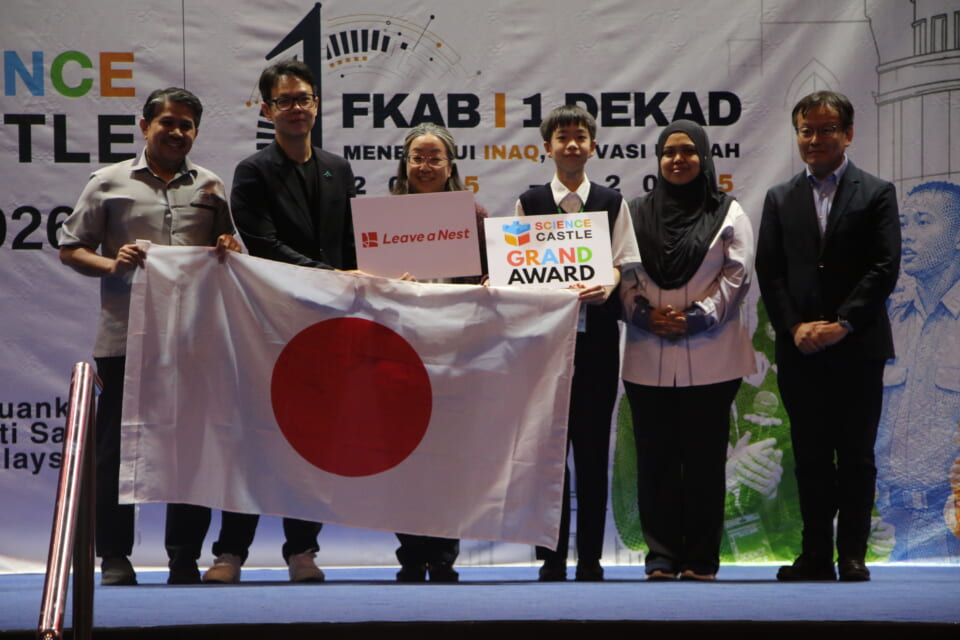
The team from Tokyo University of Agriculture The First Junior High School and High School, Japan, received the Leave a Nest Grand Award at Science Castle Asia 2026.
Science Castle Asia is designed not only as a competition but also as a platform where young researchers can strengthen their ideas, communicate science confidently and connect with peers and professionals from different fields.
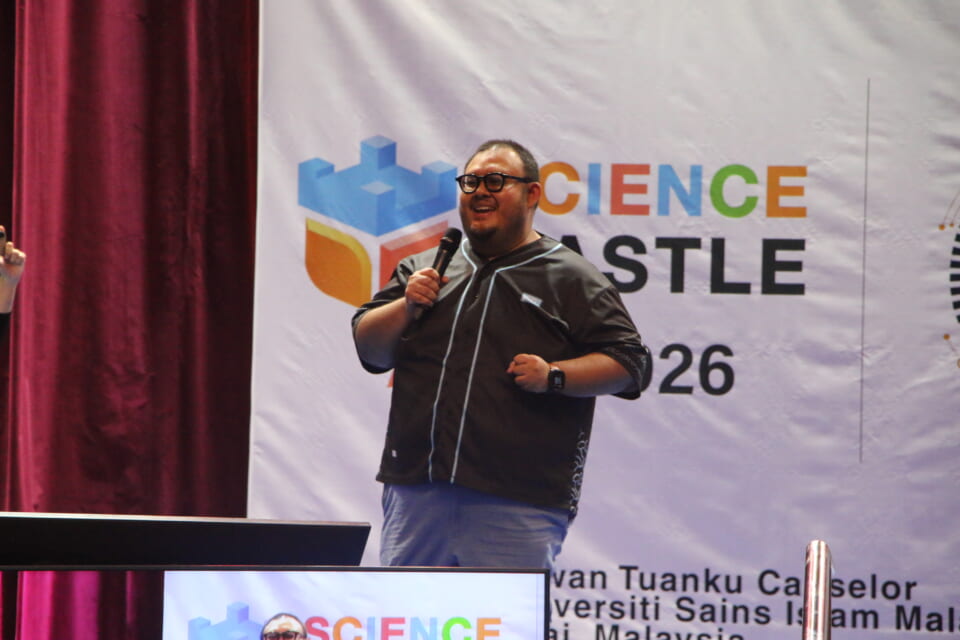
Dr. Ezral Ghazali, Head of the Education Development Department, delivering the closing remarks for Science Castle Asia 2026.
Leave a Nest aims to nurture students who can pursue their curiosity, collaborate across borders and advance their scientific ideas into meaningful solutions for society.
Science Castle Asia 2026 demonstrated that when young people are given the opportunity, guidance and confidence to pursue their curiosity, their ideas can advance beyond the classroom and contribute towards building a more sustainable future.