
Bringing Japanese-Style Education to Asia — Leave a Nest’s Daigo Fujita Visits Schools in Da Nang, Vietnam, to Explore and Demonstrate Science Education
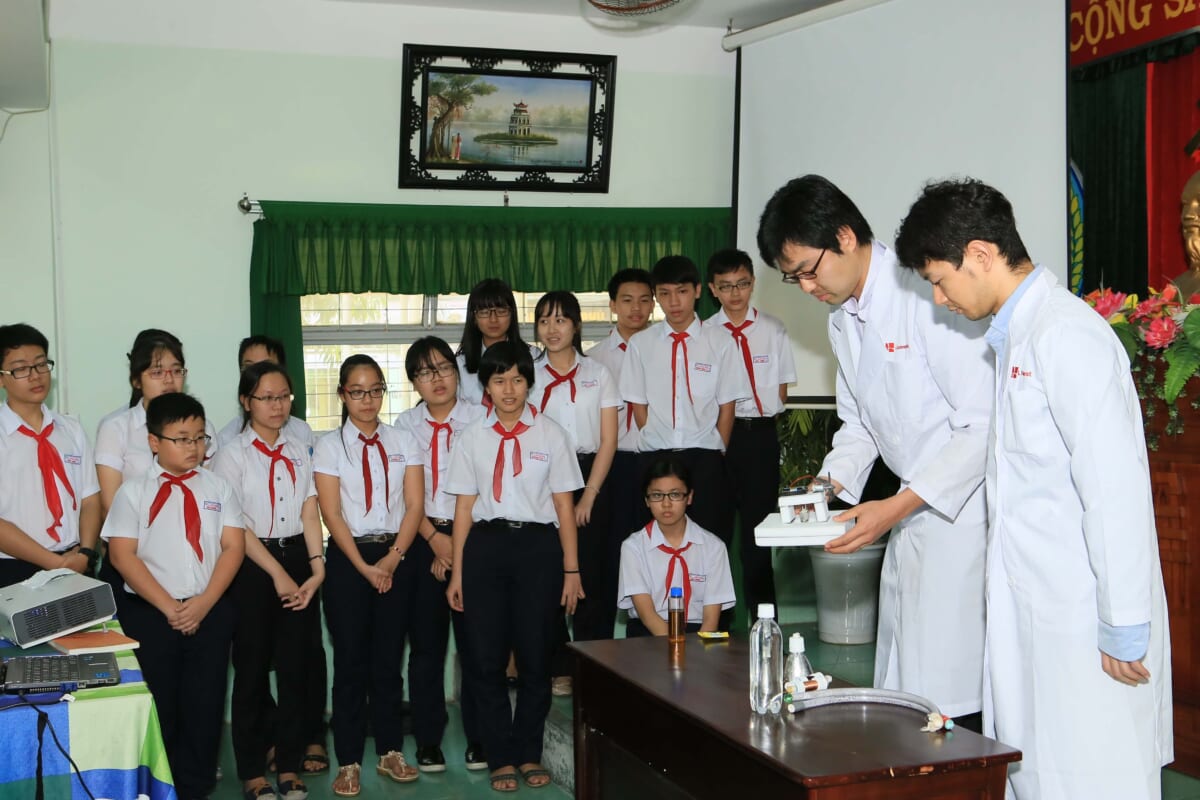
At Leave a Nest, we believe that the ability of young people to identify their own questions and pursue them through “research” will be an essential skill for navigating the future. Based on this belief, we have been expanding our educational initiatives through programs such as Science Kingdom and Leave a Nest School for elementary school students, as well as Science Castle and the Science Castle Research Fund for junior high and high school students.
The city of Da Nang, Vietnam, has begun exploring the introduction of advanced Japanese-style education with the aim of nurturing young people who can play active roles across Asia. Against this backdrop, Leave a Nest collaborated with the Vietnamese subsidiary of Selfwing, a company providing entrepreneurship education in Japan and overseas, to explore the introduction of Leave a Nest’s science education programs in Vietnam. As part of this initiative, Daigo Fujita of Leave a Nest visited educational institutions in Da Nang, the largest city in central Vietnam.
At the opening ceremony of Selfwing Vietnam held on March 6, 2016, many distinguished guests attended, including Mr. Nguyen Xuan Phuc, who was set to become Prime Minister of Vietnam in April of that year, as well as representatives of the People’s Committee and investment authorities. Their presence demonstrated the high expectations surrounding the initiative.
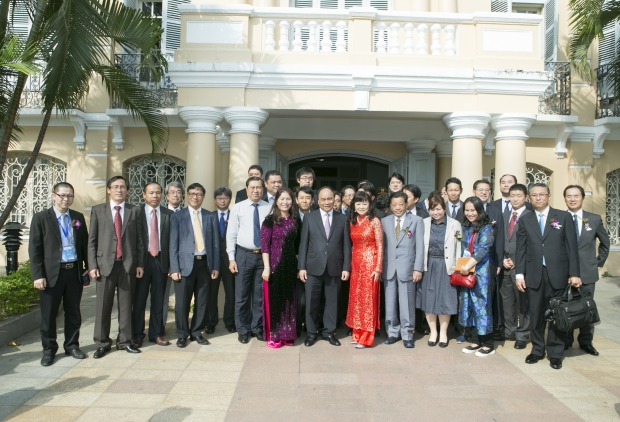
Photo: Mr. Daigo Fujita is in the back row, ninth from the left, positioned above and to the left of incoming Prime Minister Nguyen Xuan Phuc at the center.
Education in Vietnam
Compulsory education in Vietnam consists of five years of elementary school and four years of lower secondary school. Outside urban areas, however, there are still children who finish their education after five years of elementary school and begin working.
According to government-published figures at the time, the enrollment rate was 98% for elementary school and 88% for lower secondary school. Upper secondary school lasts three years, with approximately 42% of students attending.
Vietnam’s education system is centrally administered by the Ministry of Education and Training, and textbooks and teaching materials are strictly regulated. Educational materials generally cannot be used in schools without government approval.
The school year is divided into two semesters, with a summer break during the hottest months, when many schools did not yet have air conditioning. The academic year generally runs from September through January and then from January through May.
During the visit, Fujita toured several educational institutions in Da Nang and reported on the characteristics of each.
Reference: Ministry of Foreign Affairs of Japan
The University of Danang
The University of Danang is the only regional university system in Da Nang established by the Vietnamese government. It comprises a number of specialized member universities, including institutions focusing on technology, economics, foreign languages, and education.
The University of Danang conducts joint research with numerous universities in Japan, including the University of Tokyo, Tokyo Institute of Technology, and the University of Tsukuba. Having developed from a strong engineering and technology foundation, the university has particular strengths in engineering education and research.
Students showed a strong interest in pursuing careers with Japanese companies, and the university has been strengthening its Japanese-language education and internship opportunities. Fujita also had the opportunity to speak with the university president in Japanese.
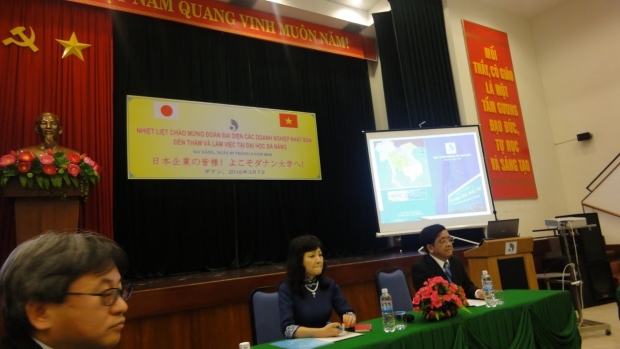
Phan Chau Trinh High School
Phan Chau Trinh High School is one of the leading high schools in Da Nang. At the time of the visit, the school had 3,766 students across 90 classes—30 classes in each of its three grades—and approximately 230 teachers.
Each grade had two Japanese-language classes. In addition to academic studies, students began learning about manners, social contribution, and business from their first year of high school. Every year, several students also participated in exchange programs with high school students from Japan.
Much of the curriculum, however, was focused on classroom-based learning in preparation for university entrance and future employment, with limited opportunities for practical experiments during regular classes. There were also no particular extracurricular activities such as science clubs.
At the time, there was a strong tendency for parents to play a major role in deciding their children’s future educational and career paths, and dedicated career education was limited. Nevertheless, the school’s university enrollment rate was approximately 90%, significantly higher than the national average.
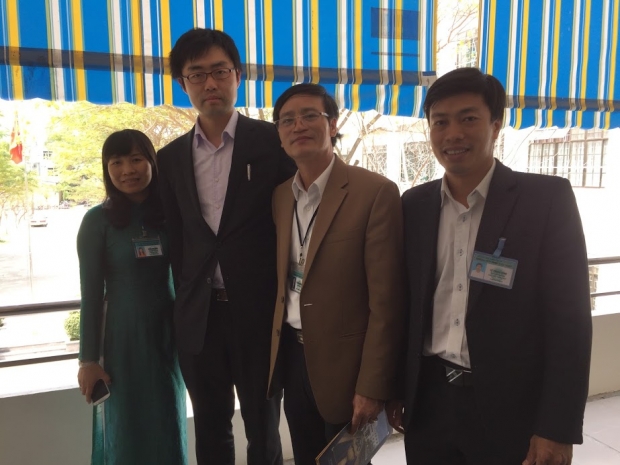
Photo: Daigo Fujita is second from the right, with the school principal third from the right.
Tay Son Junior High School
Tay Son Junior High School is located in central Da Nang. Although relatively small, with 409 students at the time, the school operated separate morning and afternoon sessions due to the limited size of its campus.
As a result, regular classes were primarily lecture-based, and students had virtually no opportunities to conduct experiments or other hands-on practical activities. When Leave a Nest conducted a science workshop during the visit, both students and teachers showed tremendous interest.
The school also had a Japanese-language program supported by two Japanese-language teachers.
Teachers are highly respected in Vietnamese society, and many of the teachers at the school were women who taught while wearing the ao dai, Vietnam’s traditional formal attire.
The school also participated in exchange programs with Japan. During the introductory session, the visitors were welcomed with a performance of the Doraemon song, while student representatives delivered an impressive presentation in Japanese.
The students also wore red scarves, which Fujita was told served as a reminder of Vietnam’s difficult wartime history. Their efforts to take on new challenges today stand upon the history that previous generations experienced.
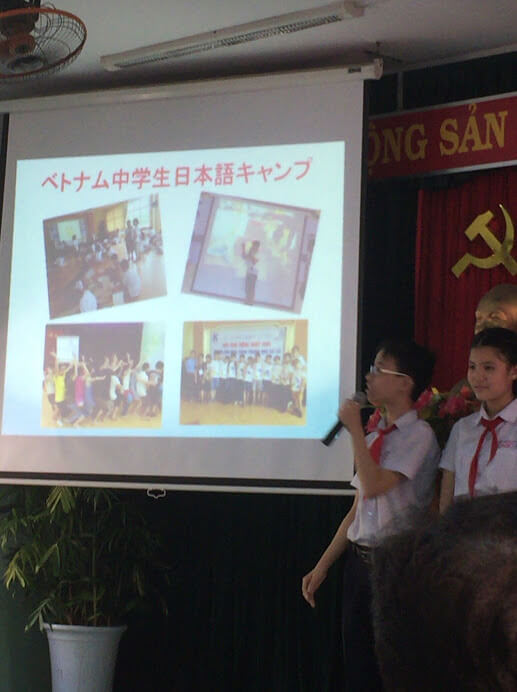
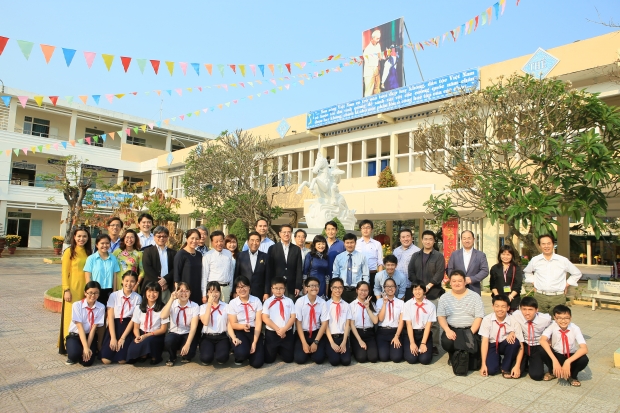
Photo: Mr. Daigo Fujita is seventh from the right in the back row.
Tran Cao Van Elementary School
Tran Cao Van Elementary School is a historic school established in 1905 during the period of French colonial rule. At the time of the visit, the school had 1,643 students across 60 classes.
In addition to academic studies, the school placed considerable emphasis on activities contributing to society. It was regarded as one of the leading elementary schools in Da Nang and had previously received recognition in a Southeast Asian robotics competition. The school day also included time for an afternoon nap.
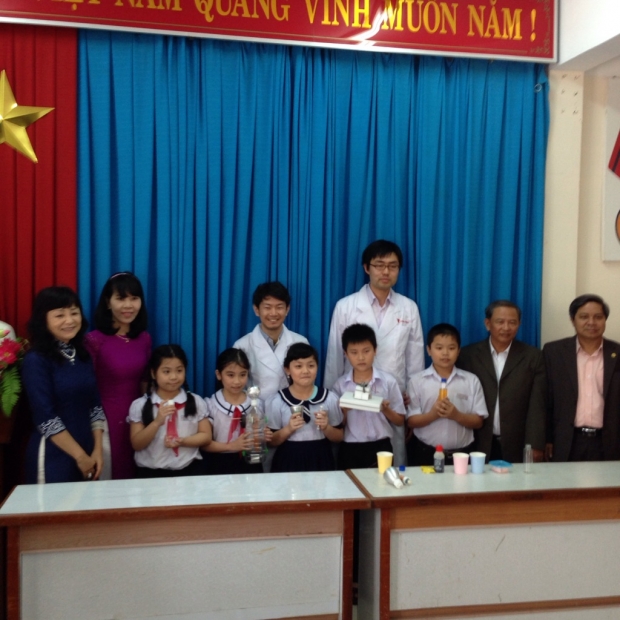
During the visit, Leave a Nest conducted a simple science workshop for the students. It was particularly memorable to see the children’s eyes light up as they experienced the experiments firsthand.
The experience convinced us that the hands-on science programs Leave a Nest had developed in Japan could equally capture the curiosity and imagination of children in Vietnam.

Going forward, Leave a Nest aims to contribute to the development of education in Vietnam through science education and to nurture a new generation of young people capable of taking on challenges and solving issues facing Vietnam and Asia.
About Da Nang, Vietnam
Da Nang is the largest commercial city in central Vietnam, located between Hanoi in the north and Ho Chi Minh City in the south. At the time of the visit, the city had a population of approximately one million.
With UNESCO World Heritage Sites such as Hue and Hoi An located nearby, as well as a reputation for safety, Da Nang has seen increasing development of resorts and other facilities in recent years.
If you are interested in this platform, feel free to contact to us!
>> Dr. Takumi Jindo, Managing Director, Leave a Nest Vietnam Co., Ltd.
[email protected] / +813-5227-4198