
From Building Robots to Thinking Like Engineers: Leave a Nest and Lockheed Martin Bring Hands-on STEM Learning to High School Students
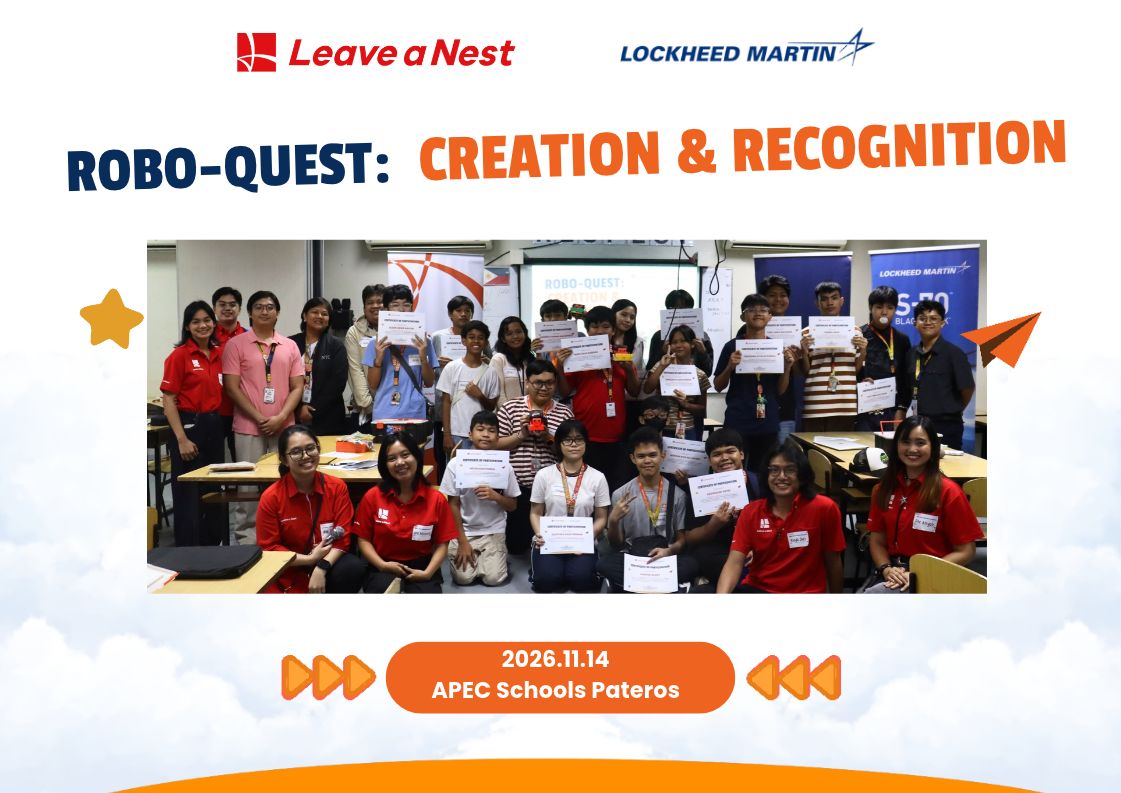
On 14 November 2026, Leave a Nest Philippines, in collaboration with Lockheed Martin, organized a hands-on robotics workshop for 20 high school students (Grades 7-10) from APEC Schools Pateros. Using Grobot robotics kits from GaraSTEM, students were challenged to design, build, and program robots to navigate obstacles, collect a sample, and safely deliver it to a designated laboratory.
Beyond learning about robotics and artificial intelligence (AI), the workshop allowed students to experience the engineering process firsthand—from understanding a problem and developing a design to testing their solutions, overcoming challenges, and making improvements. Through these activities, students discovered how creativity, critical thinking, and perseverance contribute to innovation.
Bringing Engineering and Problem-Solving Closer to Students
The workshop opened with welcoming remarks from Ms. Cherie Pablo, Principal of APEC Schools Pateros, who expressed her gratitude for the opportunity for students to explore robotics through hands-on learning.
The Lockheed Martin team encouraged students to strengthen their ideas, experiences, and critical thinking skills, connecting these to how their engineers develop technologies and solutions that keep the world safe.
Following the opening remarks, Mr. Josemaria Sison, who served as the Lead Navigation Technician, introduced navigational engineering and presented the students’ mission: to develop a robot capable of navigating a map, overcoming obstacles, retrieving a sample, and transporting it safely to a laboratory.
From Understanding the Problem to Designing a Solution
For their first challenge, students designed and built attachments for their Grobots to securely carry a bottle containing a liquid sample. They had to consider how their designs could hold the sample safely while allowing the robots to move and navigate obstacles.
Through this activity, students explored an important principle of engineering and research: effective solutions begin with understanding the problem, anticipating challenges, and preparing a thoughtful design. Rather than simply building something that works, they were encouraged to consider the purpose behind their creations and how different design choices could affect their performance.
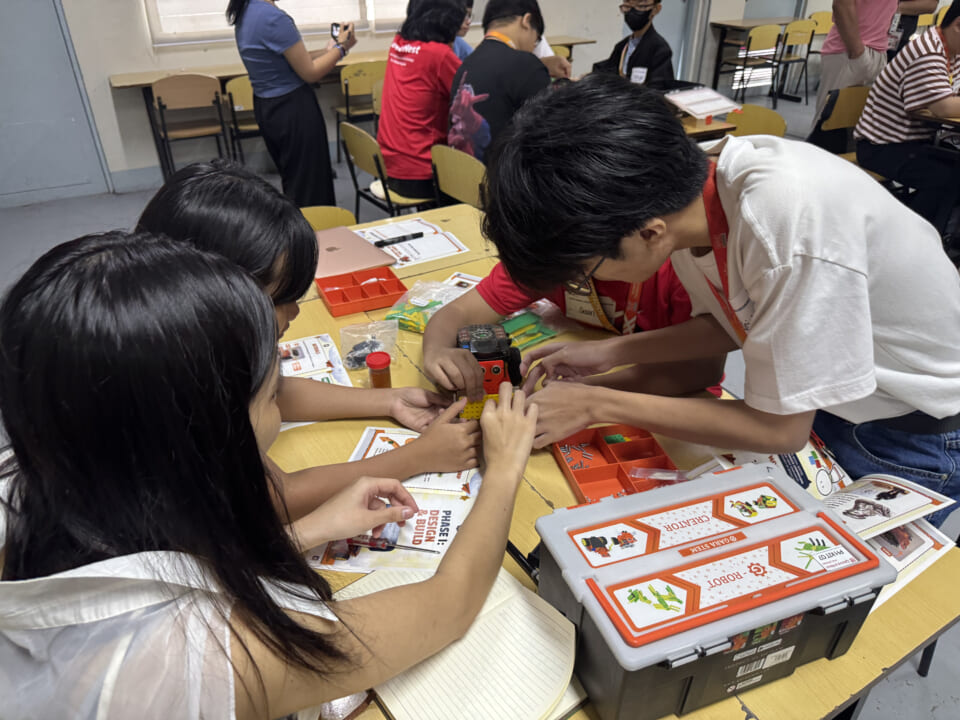
Students building their robot attachments for carrying the liquid sample
Teaching Robots to Recognize and Respond: Exploring AI and Machine Learning
With their robot attachments prepared, students moved on to developing image-recognition models using Google’s Teachable Machine. Using hand gestures, colors, and different materials, they trained AI models to recognize visual signals that would later trigger specific robot movements.
As they experimented with their models, students explored how machine learning systems identify patterns from examples and how the quality and consistency of training data influence their reliability.
This activity also encouraged students to reflect on their own learning experiences. Just as AI models require examples, practice, and adjustments to improve their performance, students were reminded that developing new skills and understanding new ideas also requires time and repeated effort.
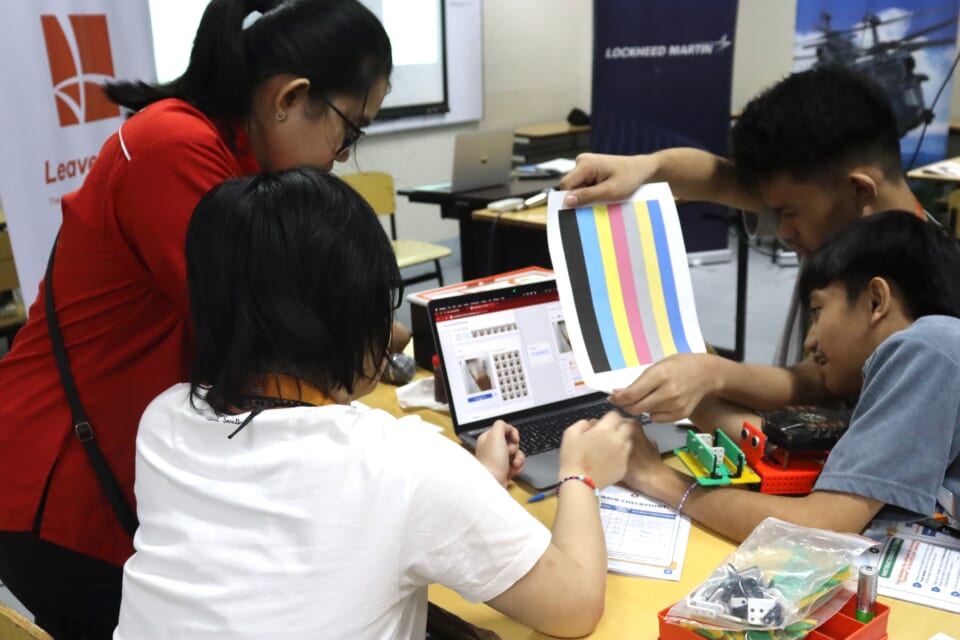
Students creating their AI image models using hand gestures
Testing, Failing, and Improving: Experiencing the Engineering Process
The final challenge brought together the students’ designs, AI models, and coding skills. They programmed their Grobots to perform actions based on their image signals and tested whether their robots could successfully navigate the mission map.
Not everything worked as expected on the first attempt.
Students encountered challenges that required them to revisit their image signals, adjust their code, and test their robots again. Rather than treating unsuccessful attempts as failures, they used these experiences to identify problems and improve their solutions.
Through this iterative process, students experienced how researchers and engineers continuously challenge, validate, and refine their ideas. They discovered that innovation is not simply about achieving success, but also about learning from unsuccessful attempts and finding opportunities for improvement.
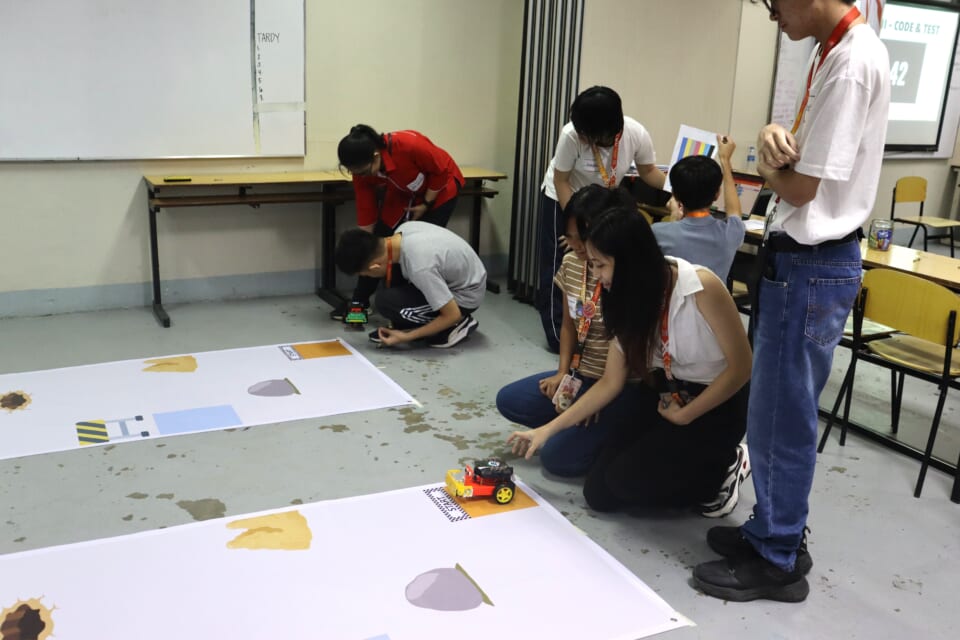
Students testing out their robots on the mission map
Beyond Robotics: Inspiring Students to Take on Their Next Challenge
Before concluding the workshop, Mr. Sison encouraged students to reflect on their experiences and consider how the same principles could apply to their research projects, future creations, and everyday challenges.
From designing and preparing their robots to training AI models, coding, testing, and improving their solutions, students experienced a complete cycle of engineering problem-solving.
When asked what they would like to create in the future, students shared ideas such as flying robots, an automatically rowing boat, and a water machine. These ideas reflected their curiosity and willingness to explore possibilities beyond the workshop.
Leave a Nest Philippines hopes that this experience will inspire students to continue challenging themselves, exploring their ideas, and developing solutions to problems they encounter.
Connecting Industry Expertise with the Next Generation of Innovators
This workshop demonstrated how industry–education collaboration can create meaningful opportunities for students to experience science and engineering beyond the classroom.
Through partnerships with companies such as Lockheed Martin, Leave a Nest Philippines aims to translate industry technologies, expertise, and real-world challenges into engaging, hands-on STEM programs that encourage students to explore scientific concepts, develop practical skills, and experience the process of innovation firsthand.
Does your company have a technology, expertise, or industry challenge that could inspire the next generation?
Leave a Nest Philippines welcomes collaborations to develop customized STEM workshops and educational programs that connect industry knowledge with young learners.
To explore potential partnerships, contact [email protected], with attention to Engr. Ronezza Delos Santos.